

OPEN 7 DAYS A WEEK > KNOX 9887 4539 > GLEN WAVERLEY 9886 7551 > FOUNTAIN GATE 8794 9777
One SmileOne SmileOne SmileOne Smile
  • Home
  • About Us
    • Our Team
    • Our Technology
    • Blog
  • Services
    • General Dentistry
      • Regular Examination
      • Root Canal Treatment
      • Fillings
      • Wisdom Teeth Removal
      • Dietary Advice
      • Oral Hygiene Instructions
      • Periodontal Care
    • Cosmetic Dentistry
      • Crowns & Bridges
      • Teeth Whitening
      • Veneers
      • Inlays & Onlays
      • Crown Lengthening
      • Full Mouth Rehabilitation
      • Digital Smile Design
    • Implant Dentistry
      • Single/Multiple Implants
      • Sinus Graft / Lift
      • Bone Grafting
      • All-on-4
    • Orthodontics
      • Invisalign & ClearCorrect
      • Myobrace
      • Braces
      • Adult Orthodontics
    • Children’s Dentistry
      • Fluoride Treatment
      • Fissure Sealants
      • Check-Up
      • Mouthguards
    • X-Ray
    • Snoring & Sleep Apnoea
  • Appointment Information
    • Emergencies
    • Health Funds
  • Book Online
    • Knox
    • Glen Waverley
    • Fountain Gate
  • Contact Us
    • Knox
    • Glen Waverley
    • Fountain Gate

Blog

Home 2026 May
gum-disease

5 Early Warning Signs of Gum Disease

By admin | Blog | 0 comment | 2 May, 2026 | 0

What is gum disease and why does it matter?

Gum disease is one of the most common oral health issues, but it’s also one of the most overlooked.

It usually starts quietly, with small changes that are easy to ignore. The early stage, known as gingivitis, can often be reversed. But if left untreated, it can progress into something more serious that affects the support around your teeth.

The challenge is that it doesn’t always feel urgent — until it is.


  1. Why do my gums bleed when I brush or floss?

Bleeding is often the first sign.

Healthy gums don’t bleed regularly. If you’re noticing blood when brushing or flossing, it usually means your gums are inflamed due to plaque build-up along the gumline.

It might seem minor or occasional, but it’s your body’s way of signalling that something isn’t quite right.


  1. Are swollen or red gums something to worry about?

Yes, even if there’s no pain.

Gums should be firm and pale pink. If they appear red, puffy, or slightly swollen, it’s often a sign of irritation or early gum disease.

Because it’s not usually painful at this stage, many people don’t act on it — which is why it can progress without being noticed.


  1. Why does my breath not feel fresh, even after brushing?

Persistent bad breath can be linked to bacteria around the gums.

When plaque builds up, it creates an environment where bacteria thrive. These bacteria release compounds that cause ongoing odour, which brushing alone may not fully resolve.

If your breath doesn’t feel fresh even after cleaning your teeth, it’s worth looking a little deeper.


  1. Have your gums started to recede?

This is a more visible sign.

You might notice your teeth looking slightly longer, or that the gumline doesn’t sit where it used to. Gum recession can happen gradually and is often linked to ongoing inflammation or brushing habits.

Once gums recede, they don’t naturally grow back — which is why early intervention matters.


  1. Do your gums feel tender or sensitive?

Even mild discomfort is worth noting.

Gums that feel sore when brushing, flossing, or eating may be reacting to inflammation. It’s easy to assume this will settle on its own, but it often continues if the underlying cause isn’t addressed.

Tenderness is often one of the early signals that your gums need attention.


Why do these signs get ignored?

Because they don’t feel urgent.

Gum disease doesn’t usually start with pain, so it’s easy to assume it’s nothing serious. Bleeding might seem normal, or bad breath might be brushed off as temporary.

But these early signs are when gum disease is easiest to manage.


What happens if gum disease is left untreated?

It can progress beyond the gums.

As it advances, gum disease can affect the bone that supports your teeth. This can lead to loosening teeth, ongoing discomfort, and more complex treatment needs.

What starts as something small can become much harder to manage over time.


Can early gum disease be reversed?

Yes — and this is the important part.

When caught early, gum disease can often be managed with improved oral hygiene and professional cleaning. Removing plaque and tartar allows the gums to heal and return to a healthier state.

The earlier it’s addressed, the simpler the process tends to be.


What should you do if you notice these signs?

Don’t wait for it to get worse.

If you’ve noticed bleeding, changes in your gums, or ongoing bad breath, it’s worth having it checked — even if it seems minor.

These signs are your opportunity to act early.


When should you come in?

If any of these symptoms sound familiar, it’s a good time to take a closer look.

Gum health plays a big role in your overall oral health, and small changes can make a significant difference when addressed early.

If you’re unsure or something doesn’t feel right, come visit us. We can assess your gums, explain what’s happening, and help you get things back on track before it progresses further.

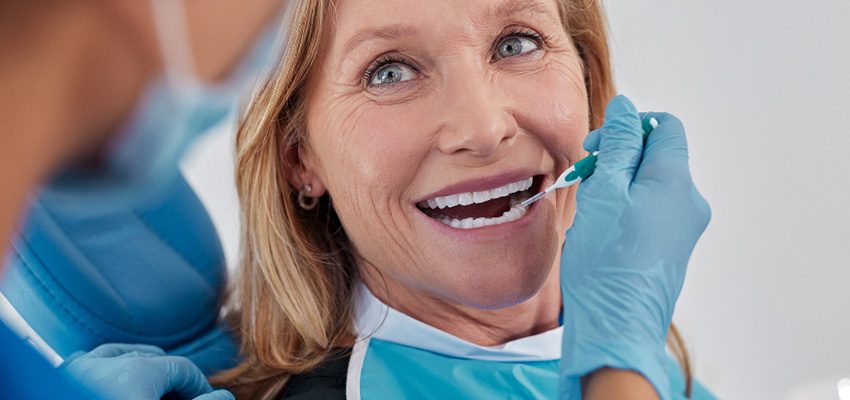
smile-healthy

6 Ways to Keep Your Smile Healthy as You Age

By admin | Blog | 0 comment | 2 May, 2026 | 0

Does your oral health really change as you get older?

Yes — and often in ways people don’t expect.

Even if your routine stays the same, your teeth and gums naturally go through changes over time. Enamel can wear down, gums may recede, and the risk of certain conditions increases.

The good news is, most of these changes can be managed with the right habits and a bit of awareness.


  1. Why does enamel wear matter more over time?

Enamel doesn’t regenerate.

Over the years, everyday habits like brushing, eating, and drinking gradually wear it down. As it thins, your teeth can become more sensitive and slightly darker in appearance.

Being mindful of how you brush and limiting frequent exposure to acidic foods can help slow this process.


  1. Should your oral hygiene routine change as you age?

It often needs to evolve.

What worked in your twenties may not be enough later on. Cleaning between your teeth becomes more important, especially as gums change and spaces can become easier for plaque to build up.

Adding floss or interdental brushes into your routine can make a noticeable difference in long-term gum health.


  1. How does gum health change over time?

Gums can become more vulnerable.

Recession is more common as you age, which can expose the root surface of the tooth and increase sensitivity. Gum health also plays a bigger role in keeping your teeth stable over time.

Keeping the gumline clean and addressing early signs of inflammation is key.


  1. Does dry mouth affect your teeth?

More than most people realise.

Saliva helps protect your teeth by washing away food particles and neutralising acids. As you get older, dry mouth can become more common, whether due to medications or general changes.

Staying hydrated and addressing dryness early can help reduce the risk of decay.


  1. Why are regular check-ups more important over time?

Because changes aren’t always obvious.

Many dental issues develop gradually and without pain. Regular visits allow small problems to be identified early, before they become more complex.

Preventive care becomes increasingly valuable as you age.


  1. Can your lifestyle impact your oral health more as you get older?

Absolutely.

Diet, stress, and habits like grinding or clenching can all have a cumulative effect over time. What might have had little impact years ago can start to show more noticeable effects later on.

Being aware of these factors helps you stay ahead of potential issues.


Is it possible to keep your teeth healthy long-term?

Yes — with consistency.

A healthy smile isn’t about perfection. It’s about maintaining good habits, adapting your routine when needed, and addressing small changes early.

Most long-term issues are preventable with the right approach.


When should you come in for a check-up?

If it’s been a while, or if you’ve noticed changes like sensitivity, gum recession, or dryness, it’s worth having things checked.

Even if everything feels fine, regular visits help keep your oral health on track.

If you want to maintain a healthy, confident smile as you age, come visit us. We can assess your current oral health and help you build a routine that supports it long-term.

toothache

Can a Toothache Go Away on Its Own?

By admin | Blog | 0 comment | 2 May, 2026 | 0

Toothaches have a way of coming and going, which is why they’re easy to ignore. One day it’s there, the next it’s gone, and it’s tempting to assume the problem has resolved itself.

But most of the time, it hasn’t.

Tooth pain is usually a sign that something has changed — and while the discomfort might settle temporarily, the cause often remains.


Can a toothache actually go away on its own?

Sometimes the pain can disappear.

But that doesn’t mean the issue is gone.

A toothache can ease if inflammation reduces or if the nerve becomes less reactive for a period of time. In some cases, the nerve may even stop responding altogether — which can make it feel like the problem has “fixed itself”.

In reality, that’s often a sign the issue has progressed further.


What usually causes a toothache in the first place?

There’s always an underlying reason.

Toothaches are commonly linked to decay, cracks, infections, or issues with existing dental work. Anything that exposes or irritates the nerve inside the tooth can trigger pain.

Sometimes it’s obvious, like a sharp pain when biting. Other times, it’s more subtle — a dull ache, pressure, or sensitivity that comes and goes.


Why does the pain come and go?

Because the trigger isn’t constant.

You might only feel it when eating, drinking something hot or cold, or putting pressure on the tooth. Outside of those moments, it can feel completely normal.

That inconsistency is what makes it easy to ignore — but it doesn’t mean the tooth is healthy.


Is it a good sign if the pain stops completely?

Not always.

If a toothache disappears without treatment, it can sometimes mean the nerve inside the tooth has been affected more seriously. While that might stop the pain temporarily, it doesn’t resolve the underlying issue.

In some cases, the problem can continue to develop without obvious symptoms.


Can you manage a toothache at home?

You can manage the symptoms — but not the cause.

Pain relief, avoiding certain foods, or using desensitising products may help temporarily. But these don’t fix what’s happening inside the tooth.

If there’s decay, a crack, or an infection, it will still need to be treated properly.


What happens if you leave a toothache untreated?

It usually gets worse over time.

What starts as mild discomfort can develop into more persistent pain, infection, or damage to the tooth. The longer it’s left, the more complex the treatment can become.

Early treatment is almost always simpler and more predictable.


How do you know if it’s something serious?

There are a few signs to watch for.

Pain when biting, lingering sensitivity, swelling, or discomfort focused on one specific tooth are all worth paying attention to. If the pain is waking you up at night or becoming more frequent, it’s a clear signal something needs attention.

Even if the symptoms seem mild, it’s better not to guess.


Is it ever okay to wait and see?

It’s understandable — but not ideal.

Because toothaches can come and go, it’s easy to wait until it feels worse. The risk is that by the time it becomes consistent, the issue has already progressed.

Checking it early gives you more options and usually leads to simpler treatment.


What’s the best next step?

If you’ve had a toothache — even if it’s gone now — it’s worth finding out why it happened.

Pain is your body’s way of flagging a problem. Ignoring it doesn’t make it disappear, it just delays the solution.

If something hasn’t felt quite right, come visit us. We can assess the tooth, identify what’s causing the issue, and help you resolve it before it turns into something more serious.

Recent Posts

  • 5 Early Warning Signs of Gum Disease
  • 6 Ways to Keep Your Smile Healthy as You Age
  • Can a Toothache Go Away on Its Own?
  • 5 Simple Ways to Protect Your Teeth This Easter
  • The Real Reason Your Teeth Feel Sensitive

Recent Comments

    Archives

    • May 2026
    • April 2026
    • March 2026
    • February 2026
    • January 2026
    • December 2025
    • November 2025
    • October 2025
    • August 2025
    • July 2025
    • June 2025
    • May 2025
    • April 2025
    • March 2025
    • February 2025
    • December 2024
    • November 2024
    • October 2024
    • September 2024
    • August 2024
    • July 2024
    • June 2024
    • May 2024
    • April 2024
    • March 2024
    • February 2024
    • January 2024
    • December 2023
    • September 2023
    • August 2023
    • July 2023
    • June 2023
    • May 2023
    • April 2023
    • March 2023
    • February 2023
    • January 2023
    • December 2022
    • November 2022
    • October 2022
    • September 2022
    • August 2022
    • July 2022
    • June 2022
    • May 2022
    • April 2022
    • February 2022
    • January 2022
    • December 2021
    • October 2021
    • September 2021
    • August 2021
    • July 2021
    • May 2021
    • April 2021
    • March 2021
    • February 2021
    • January 2021
    • November 2020
    • September 2020
    • August 2020
    • July 2020
    • June 2020
    • April 2020
    • March 2020
    • February 2020
    • January 2020
    • December 2019
    • November 2019
    • October 2019
    • September 2019
    • August 2019
    • July 2019
    • June 2019
    • May 2019

    Categories

    • Blog
    • Recipe

    Meta

    • Log in
    • Entries RSS
    • Comments RSS
    • WordPress.org
    • Home
    • About Us
    • Services
    • Book Online
    • Contact Us
    • Privacy Policy
    Copyright 2015 One Smile | All Rights Reserved.
    Dental Website by Integrated Dental Marketing
    • Home
    • About Us
      • Our Team
      • Our Technology
      • Blog
    • Services
      • General Dentistry
        • Regular Examination
        • Root Canal Treatment
        • Fillings
        • Wisdom Teeth Removal
        • Dietary Advice
        • Oral Hygiene Instructions
        • Periodontal Care
      • Cosmetic Dentistry
        • Crowns & Bridges
        • Teeth Whitening
        • Veneers
        • Inlays & Onlays
        • Crown Lengthening
        • Full Mouth Rehabilitation
        • Digital Smile Design
      • Implant Dentistry
        • Single/Multiple Implants
        • Sinus Graft / Lift
        • Bone Grafting
        • All-on-4
      • Orthodontics
        • Invisalign & ClearCorrect
        • Myobrace
        • Braces
        • Adult Orthodontics
      • Children’s Dentistry
        • Fluoride Treatment
        • Fissure Sealants
        • Check-Up
        • Mouthguards
      • X-Ray
      • Snoring & Sleep Apnoea
    • Appointment Information
      • Emergencies
      • Health Funds
    • Book Online
      • Knox
      • Glen Waverley
      • Fountain Gate
    • Contact Us
      • Knox
      • Glen Waverley
      • Fountain Gate
    One Smile